


Natural materials offer durability and beauty that challenge today’s throwaway culture. A high-quality accessory handwoven from natural fibers lasts a long time in use and keeps its appearance year after year. A handmade fair trade bag is a long-lasting and practical choice for everyday life. Every fiber and variation in tone reflects the material’s natural origin and the precise work of a skilled artisan.
Environmental awareness and sustainable choices are leading many people to value slower, more considered consumption. Natural materials and responsible production methods offer a clear alternative. But how are these accessories made, and how can consumers support traditional craftsmanship through their own choices? Turning plant fibers into a finished, hard-wearing accessory requires many stages of expertise and carefully preserved working methods.
Natural materials and heritage passed down through generations
Unlike mass-produced objects, a handwoven fair trade bag expresses the individual handprint of its maker. These accessories are crafted by hand in regions where traditional weaving techniques are passed down from one generation to the next. The finished products reveal the maker’s long experience and precision, as every fiber is handled and woven by hand from start to finish.
A handmade product naturally contains small individual differences that make each piece unique. Slight variations in shape or weave tell of authentic craftsmanship and distinguish the product from something made by machine. This skill, passed down through generations, ensures a level of quality that is difficult to achieve in industrial mass production. The finished accessories are durable and retain their value for a long time in everyday use.
What does fair trade mean in practice for handmade products and accessories?
Corporate responsibility is often discussed in complicated terms, but in handmade products, fair trade principles mean very practical things. They directly improve the quality of life and livelihoods of the makers. Fair trade is about fair pay, safe working conditions, and equal treatment at every stage of the production chain.
In practice, fair trade guarantees artisans fair compensation that enables a stable livelihood. A regular and reliable income improves families’ financial security, helps cover living costs, and makes children’s education possible. Responsible operations also include safe working conditions and long-term partnerships. When local producers are treated as equal partners, a stable foundation is created for the independent development of communities.
The journey of sisal and raffia from the soil to durable everyday products
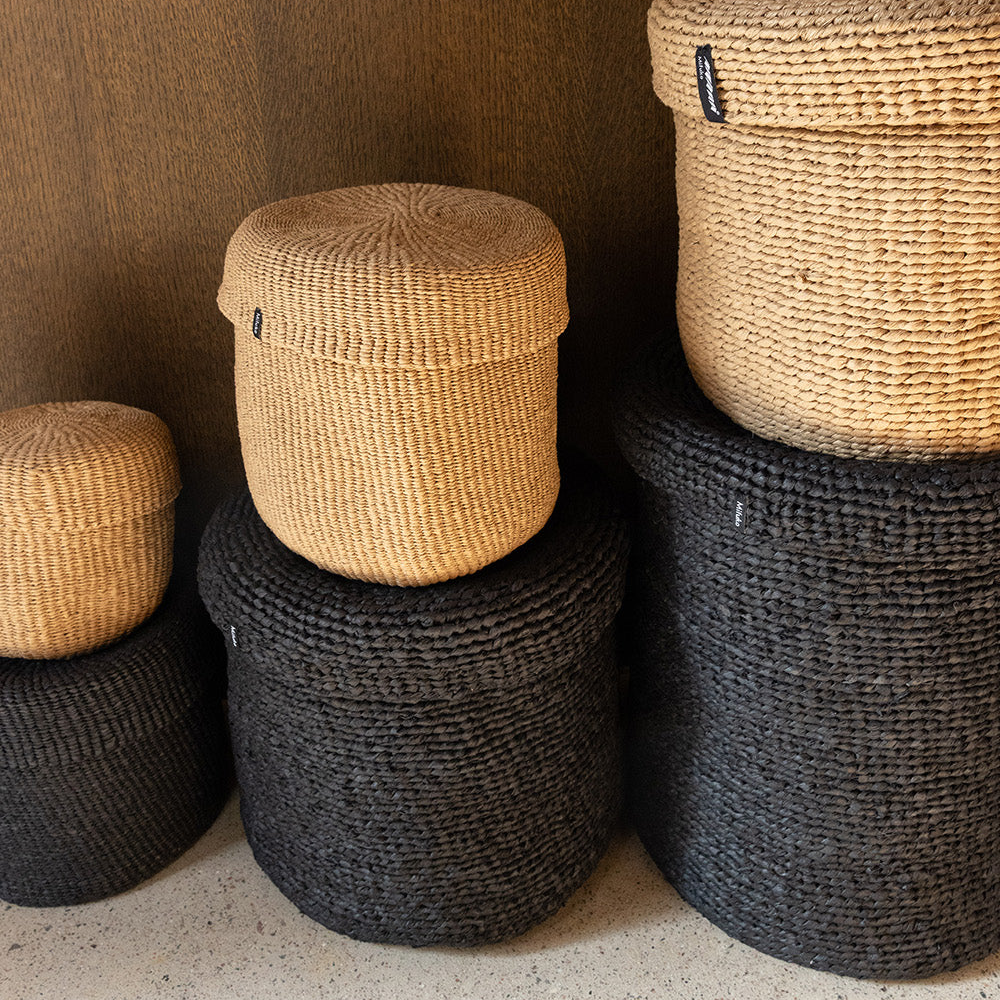
Sisal and raffia are examples of exceptionally durable and ecological natural fibers. The strength of sisal fiber and the flexibility of raffia make them ideal raw materials for products designed for heavy everyday use. These plant-based materials withstand long-term use, develop a beautiful patina over time, and are ultimately fully biodegradable, so they do not burden the environment at the end of their life cycle.
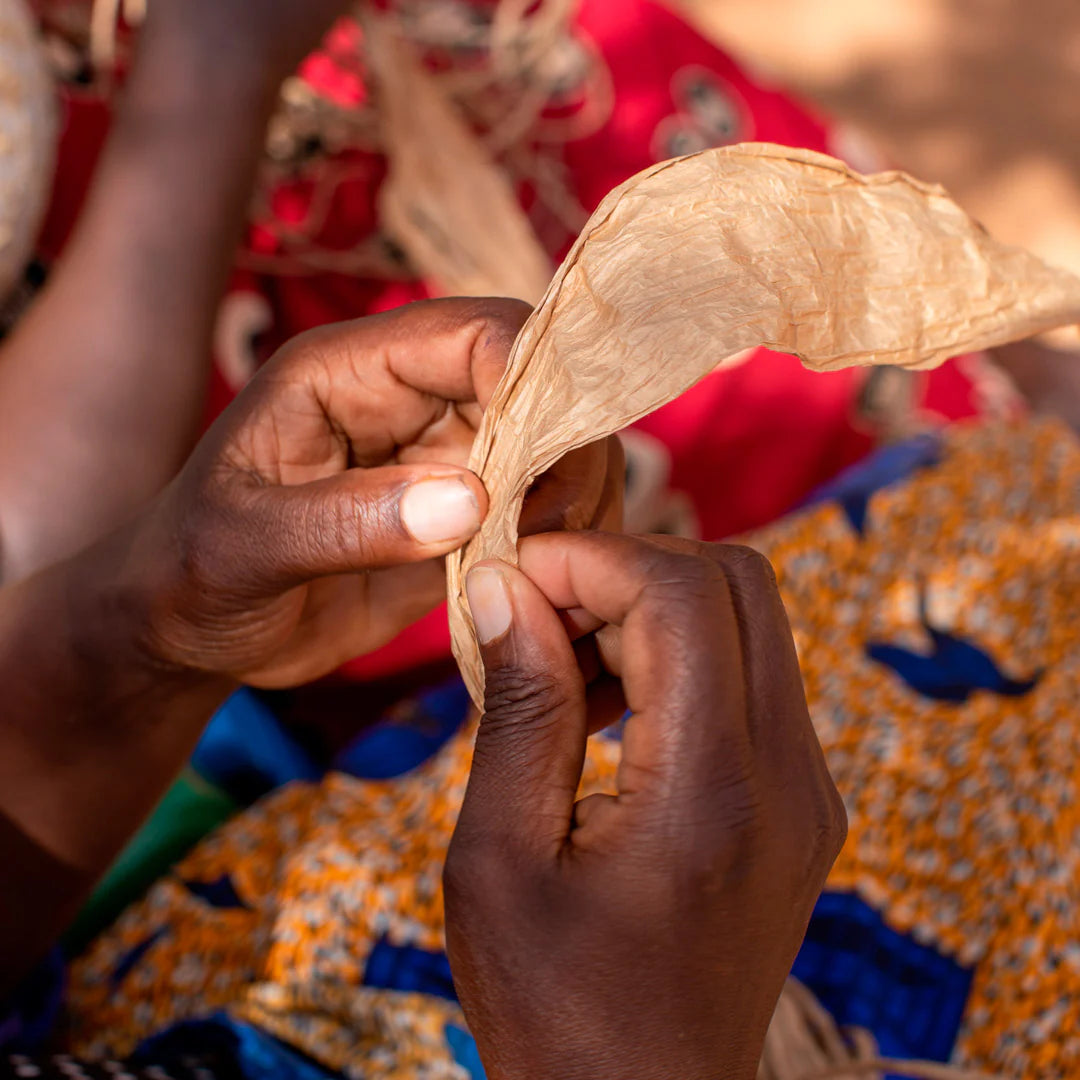
Sisal comes from the leaves of the agave plant, which are harvested by hand without damaging the plant itself. The fibers are separated from the green part of the leaves, washed, and dried in the open air, where they take on their naturally pale shade. Raffia, in turn, is separated from the fine fibers found on the underside of raffia palm leaves. These natural fibers tolerate wear and changes in moisture well. The fibers are often dyed using traditional methods, preserving their natural appearance and making each color batch slightly different.
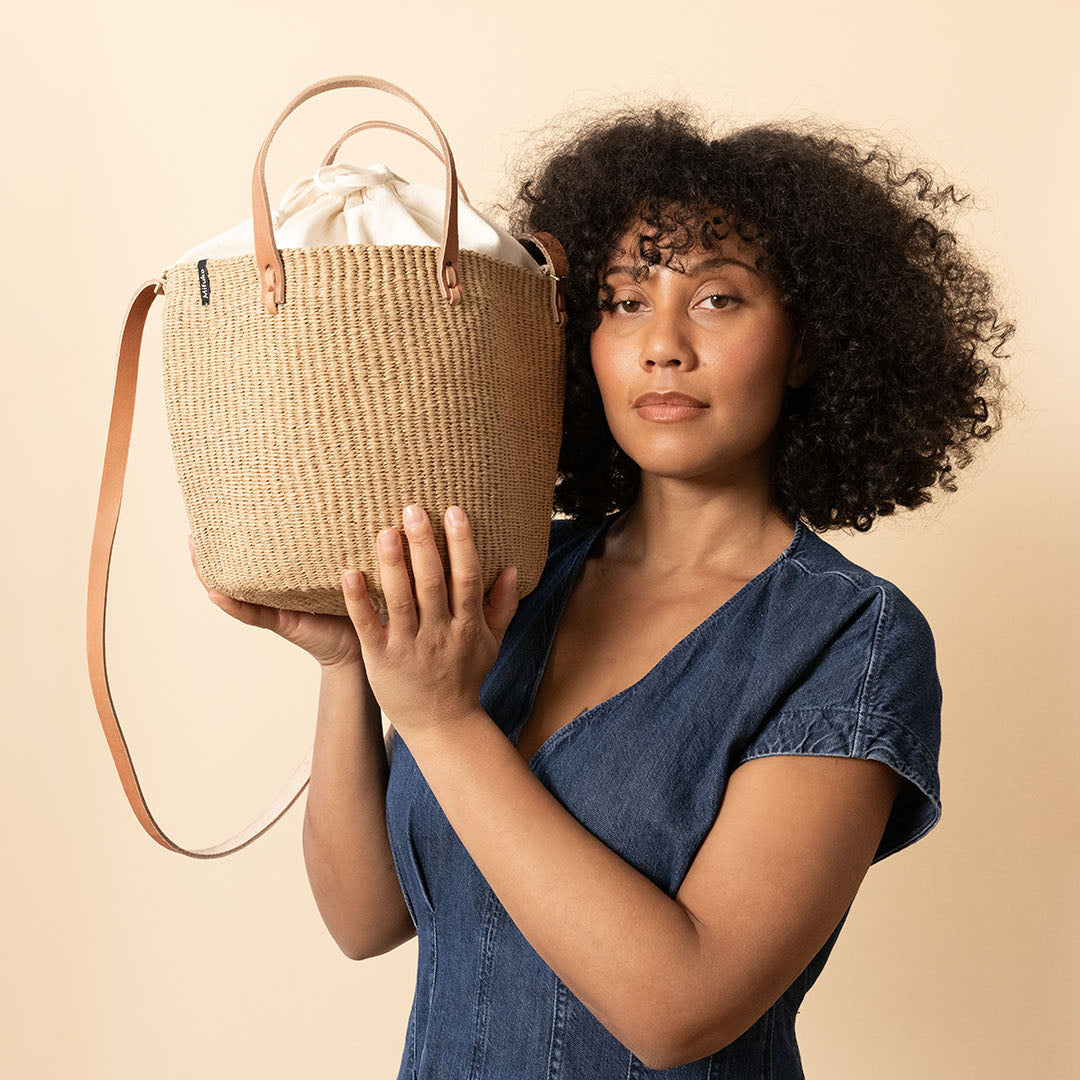
Kiondo Shoulder Bag
Mifuko’s classic, handwoven Kiondo shoulder bag combines durability with timeless design. The resilience of sisal makes this brown oval bag a practical and responsible choice for everyday use.
Explore the Kiondo Shoulder BagHow do fair trade principles support women in developing countries?
For women living in rural areas of developing countries, the opportunity to earn an independent income significantly improves their social and economic position. By purchasing a fair trade bag, you directly support artisans’ independence and wellbeing. It is an equal trading partnership that creates lasting economic security.
In many regions, traditional farming has become an uncertain livelihood due to climate change and drought. Alongside agriculture, craftwork offers a flexible and reliable additional income when harvests are poor. Because weaving can be done at home alongside other daily responsibilities, it fits well with family life. A stable income strengthens women’s position both within the family and in decision-making across the local community.
How can I make sure the bag I buy is genuinely ethically made?
When comparing different brands’ responsibility claims, it can be difficult to identify products that are genuinely ethically made. However, the origin can often be verified by looking closely at the product’s details. Many fair trade products include, for example, a name tag signed by the maker. It tells you directly who made the product and proves that it is genuine handcraft rather than industrial mass production.
Another reliable method is to check independent certifications. The World Fair Trade Organization (WFTO) is a global organization that monitors the implementation of fair trade principles from sourcing all the way to the finished product. WFTO certification covers not only individual raw materials but the company’s entire way of operating, ensuring that it is based on human rights, fair pay, and respect for the environment. Transparency is the foundation of responsibility: when a producer can show the full journey of a product from raw material to finished accessory, the purchase decision can be made with confidence.
Supporting craftsmanship promotes sustainable development
By choosing responsibly produced objects, consumers can directly influence the fairness of production chains. Every carefully chosen accessory made from natural materials is a practical choice against throwaway culture. It supports dignified work, the preservation of traditional craft skills, and production that places less strain on the environment.
High-quality natural materials, such as strong sisal, banana fiber, and durable leather, are extremely long-lasting in use. These materials develop a beautiful patina and tolerate wear, allowing the products to last for years. For example, the timeless Majani shoulder bag combines banana fiber, paper twine, and leather with modern Nordic design. The result is a high-quality accessory that withstands daily use and remains in good condition for a long time. A purchase decision is an easy way to support ethical production and traditional craftsmanship.