



High-quality and long-lasting storage solutions bring practical order and a natural look to the home. Hand-woven baskets made from natural fibers are a durable choice for everyday storage. Unlike industrial plastic boxes, natural materials react somewhat to environmental conditions, such as air humidity, which affects their flexibility and shape.
During transport or when stored in a tight space for a long time, a large basket may sometimes get squashed or lose its round shape. This is not damage or a quality issue. Natural fibers, such as sisal and elephant grass, are extremely flexible materials. With the right methods, a squashed basket can easily be reshaped back to its original, sturdy form, ensuring it lasts in use for a long time.
Why does a basket woven from natural materials change its shape?
Natural materials used in basket weaving, such as sisal fibers and elephant grass, are naturally flexible and tough. These fibers react to ambient air humidity by absorbing and releasing it depending on conditions. Because of this, the flexibility of the basket may vary according to the seasons and indoor air.
When a basket is packed tightly for transport or pressed in a closet, the fibers adapt to the pressure. Many synthetic materials might fracture or crack under stress, but natural fibers flex without breaking. Flexibility is a sign of high quality and authenticity of the material. It also tells of traditional craftsmanship that utilizes the natural properties of the material.
Dry indoor air, especially during winter, causes the fibers to tighten and become stiffer. In this case, a squashed basket retains a misshapen form more easily. Straightening the basket does not require special tools; all you need is water and a bit of hand-shaping.
How to restore the shape of a squashed woven basket?
Reshaping a squashed basket back to its original form is a simple procedure. Water softens the dry and stiffened fibers, making them flexible and easy to mold again. Moistened material easily conforms to a new shape without damage.
Reshaping the basket is easy using the following instructions:
Step-by-step reshaping guide
- Moisten the fibers: Spray the surface of the basket with lukewarm water using a spray bottle, or rinse it quickly under running lukewarm water, for example in the shower. The fibers do not need to be soaking wet. It is enough that they get lightly moistened and soften up to become flexible.
- Shape by pressing with hands: When the basket is damp and feels pliable, push the fibers outward from the inside of the basket. Roll the basket against the floor or shape it with your hands to restore a round and even shape. The moistened material easily adapts to the correct position.
- Allow to dry in an airy space: Place the shaped basket to dry in a warm place with good air circulation. Ensure that the basket is on a flat surface so that its bottom dries straight and stable. Avoid placing the basket directly on a hot radiator or in strong sunlight, as drying too quickly can make the fibers brittle.
This wetting and reshaping process can be repeated whenever necessary if the basket gets squashed during use. The treatment restores the flexibility of the fibers and helps keep the basket sturdy for a long time.
Durable materials make care easy
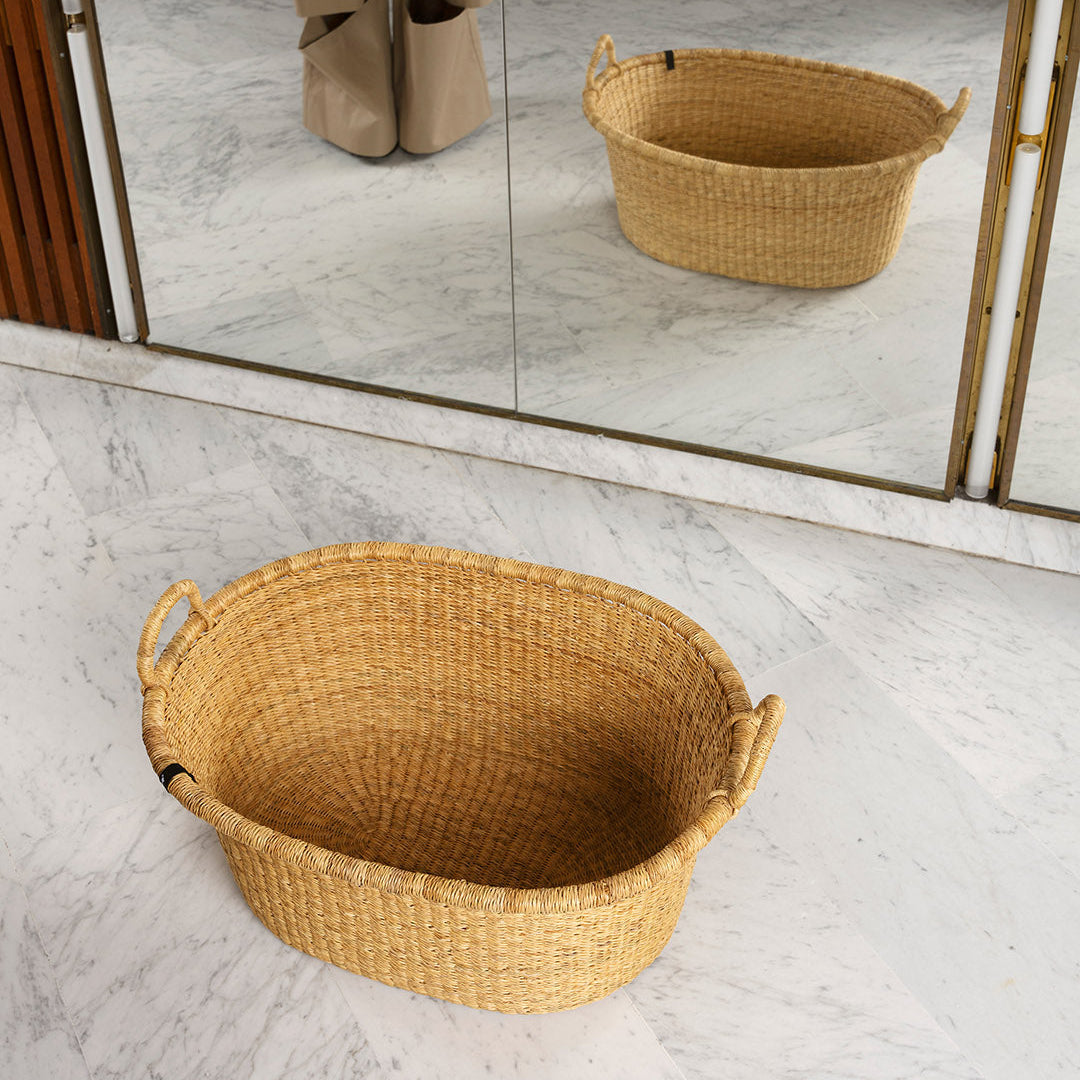
Mifuko's large Bolga laundry basket XXL hand-woven from elephant grass is an excellent example of this flexibility. This durable and spacious laundry basket softens and straightens effortlessly using the wetting method. Regular and proper care ensures that the basket retains its shape and serves everyday life in the home year after year.
Explore the Bolga laundry basketCleaning and regular care of a woven basket
Large storage baskets are in heavy use when storing linens, toys, or throw blankets. Regular and gentle care keeps baskets made of natural fibers clean and extends their lifespan. Avoid strong chemicals and cleaning agents, as they can dry out the fibers and weaken the structure of the weave.
For removing dust and loose debris, regular vacuuming on low power with a soft brush nozzle is sufficient. This prevents the fibers from pulling out of the weave. Stains can be cleaned with a damp cloth moistened with warm water. Wipe the stain by pressing gently and avoid vigorous rubbing to prevent the fiber surface from fraying or fuzzing up.
Kiondo floor basket black with handles XXL
This spacious and durable basket is woven from FSC-certified paper. Sturdy black handles make moving the basket easy and give it a polished look.
Explore the Kiondo floor basketDuring care, pay attention to leather details and carrying handles as well. Leather develops a patina with use, but it does not tolerate excessive moisture. Protect leather handles from getting wet when reshaping or washing the body of the basket under running water. If leather parts dry out, they can be treated with colorless leather wax or conditioner, which prevents cracking and maintains the softness of the leather.
Is a woven basket suitable as a planter cover for a houseplant?
Green plants and earthy, hand-woven baskets match exceptionally well in style. A large basket serves as a beautiful planter cover for, for instance, a Swiss cheese plant or other larger houseplants. However, natural fibers are sensitive to constant moisture, so placing a plant in a basket requires a few preparations.
Standing water and damp soil can damage the fibers and cause mold growth or weakening of the material. Therefore, a plant should never be planted directly into a woven basket. Always use a waterproof saucer or a plastic protective liner inside the basket to prevent irrigation water and soil from coming into contact with the bottom of the basket.
Allow excess water to drain from the pot onto the saucer and empty the saucer if necessary. This keeps the bottom of the basket dry and airy. Thanks to this easy routine, you can use the basket as a planter cover for your plants for a long time without the risk of moisture damage.
Appreciation for craftsmanship and the long lifespan of an object
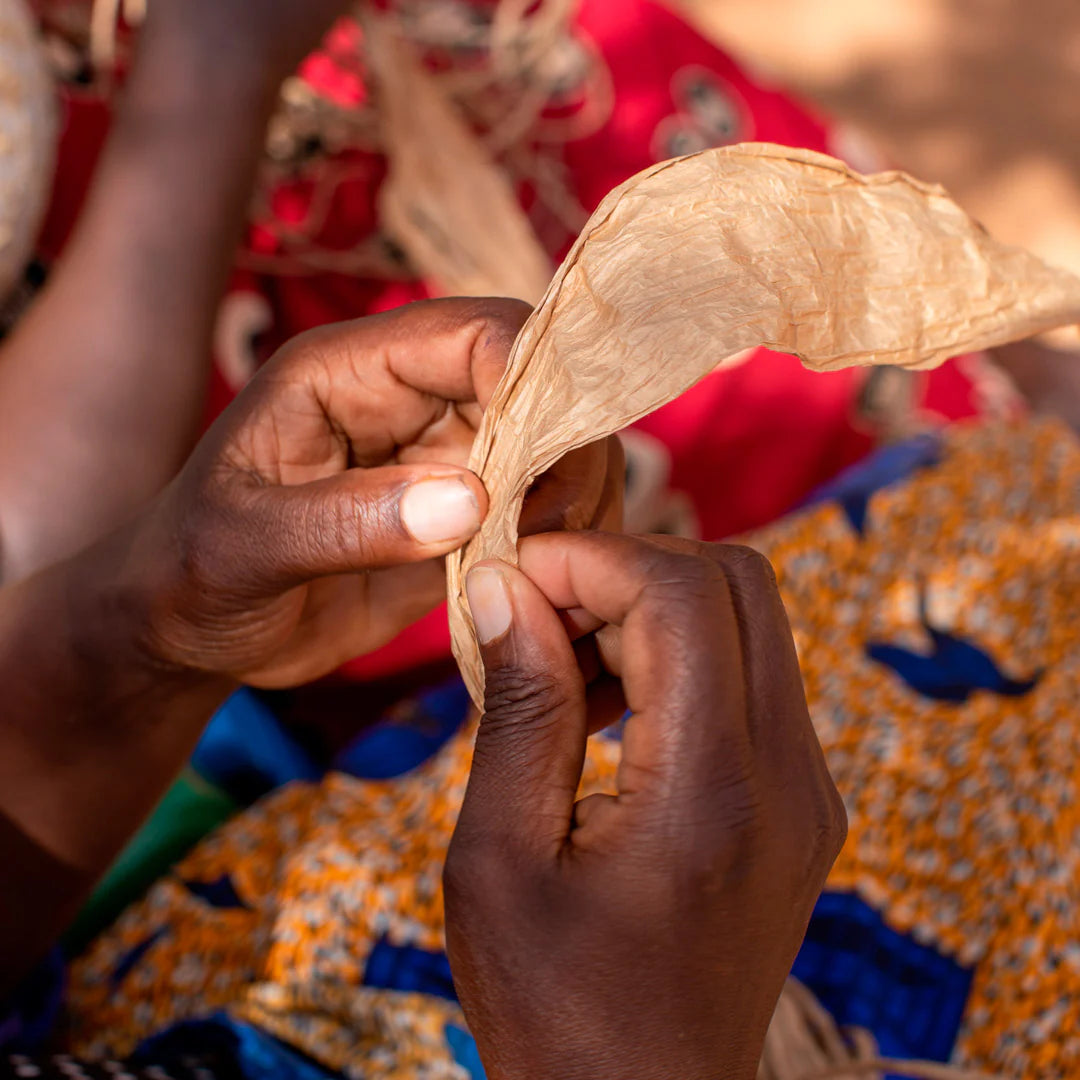
Taking care of baskets is a practical act that extends the lifespan of high-quality craftsmanship. Every hand-woven basket is a testament to the skill of artisans, often passed down from generation to generation. Making a single large basket takes several days of work, where natural materials are molded into a durable utility item completely by hand.
Instead of a throwaway culture, caring for items and repairing them promotes sustainable consumption. Regular care extends the product's lifespan and respects the time and effort spent on its manufacturing. Every Mifuko basket is responsibly produced following Fair Trade principles, guaranteeing female artisans a secured livelihood in rural Africa.
Regular care and reshaping keep the basket functional and beautiful for a long time. A high-quality basket made of natural material ages gracefully and lasts in use for years. By investing in the maintenance of items, you save natural resources and create long-lasting, clear, and functional order in your home that withstands daily wear and tear.