



A bag that accompanies you through your daily life is one of our most personal objects. It is a companion that looks after our most important belongings. But what if it could carry more than that? What if it could carry a story, values, and a connection to another person on the other side of the world?
The concept of Fair Trade is becoming familiar to more people, and an increasing number of us want to make choices that support sustainable development. However, as the market grows, the jungle of messages and claims has also thickened. How do you know if a bag is genuinely a Fair Trade product? How can you distinguish a true commitment to responsibility and the environment from a passing trend?
This article is your guide to fairer choices. We invite you on a journey where you will learn to look deeper than the price tag and product description. Together, we will explore materials that speak of respect for nature and craftsmanship passed down through generations. We will give you the tools to identify reliable operators and understand why the story behind the product is the most important guarantee of authenticity. You will learn to see how a bag can be more than an accessory—it can be a statement for a more beautiful, just, and sustainable world.
What Does Fair Trade Mean in a Bag?
Have you ever stopped to think about what your bag's price tag really says? It’s not just a number; it tells a larger story. The low prices of fast fashion producers might be tempting, but in reality, ethical work is never free. A truly Fair Trade bag is not just an accessory, but a promise of something better. It is a choice that carries values and affects people's lives further away than we might imagine. When you choose such a bag, you aren't just buying an object; you are investing in a person and their community.
More Than a Fair Wage – It’s About Dignity
Fair Trade is a holistic commitment that goes much deeper than mere financial compensation. It is a philosophy based on respect and genuine partnership. It is a promise that every hand that has touched your bag has done so in dignified and safe conditions. When you choose a (Fair Trade product), you support a system where:
-
The artisan receives fair compensation. This means a wage that not only covers basic living needs but also enables saving, children's education, and planning for the future. It is a wage that gives the freedom to dream.
-
Working conditions are safe and humane. In companies that follow Fair Trade principles, there is no room for exploitation or dangerous environments. It’s about a workplace that empowers rather than exhausts. The workplace should be an environment where the makers' skills are valued and developed.
-
Communities flourish. Fair Trade invests in local communities by supporting education, healthcare, and the development of sustainable livelihoods. Your purchase supports the well-being of an entire community, as we work extensively toward this through the (Mifuko Trust foundation).
"When I weave this basket, I don't just think about the end result. I think about my daughter, who gets to go to school. It gives my work a purpose."
Materials and Craftsmanship – The Visible Signs of Ethics
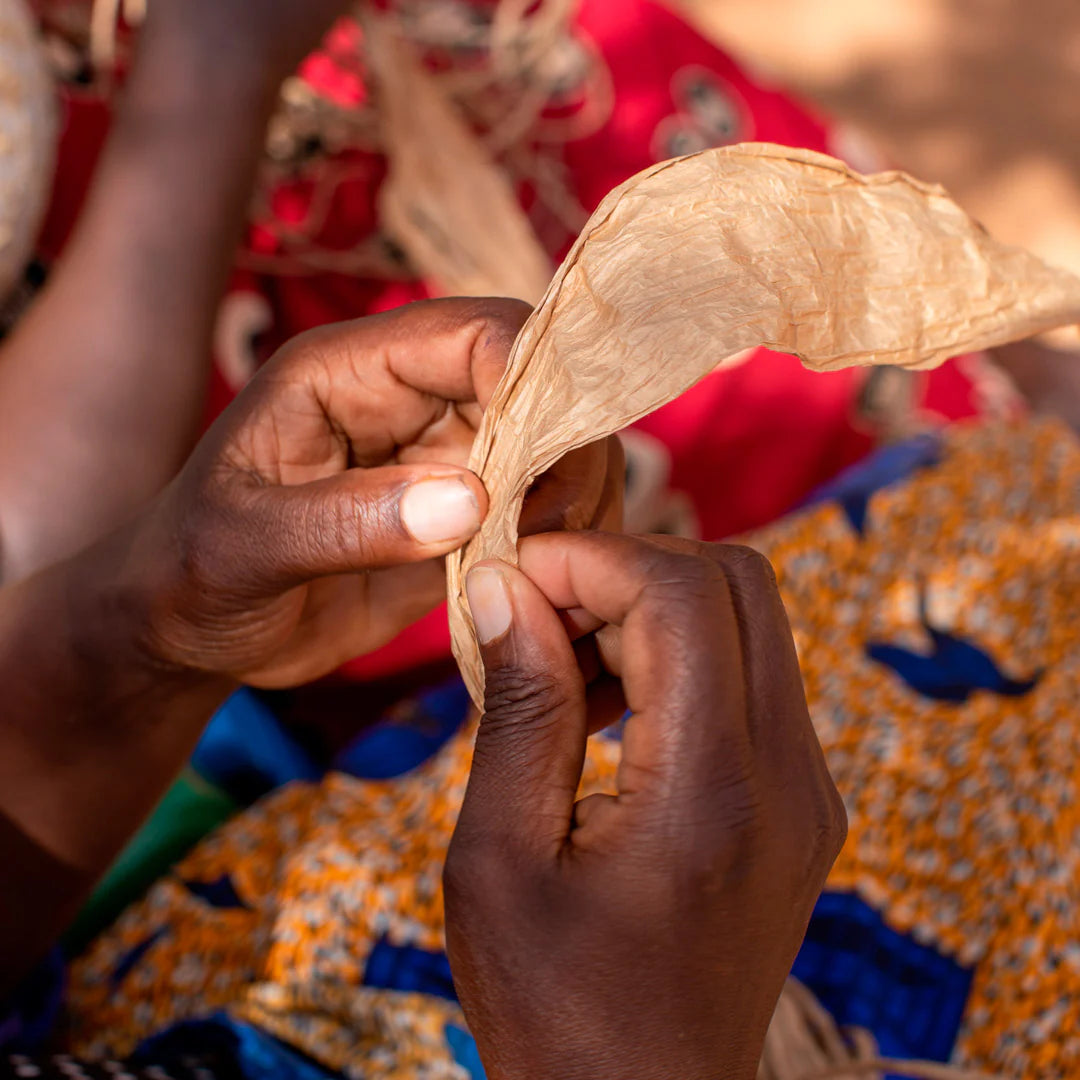
An authentic Fair Trade bag feels different. You can feel it in your fingertips and see it in its unique structure. It is not a shiny, flawless copy from mass production; instead, it whispers stories of nature and skill passed down through generations. When you learn to recognize these signs, you learn to see ethics. Pay attention to what your bag is made of and how it was created.
In Nature's Embrace: The Story of Materials
Ethics begin at the roots—the materials. Sustainable and natural materials are not only an eco-friendly choice, but they also respect local ecosystems and traditions. They are a gift from the land, shaped by an artisan into a beautiful object.
-
Local Natural Fibers: For example, sisal, papaya tree fiber, or recycled paper do not require industrial farming; they are part of a sustainable cycle and provide a reliable source of income.
-
Recycled Materials: Innovative reuse of plastic or other materials gives the discarded a new life, reduces waste, and simultaneously creates something uniquely beautiful.
-
Non-toxic Dyeing: Plant-based and non-toxic colors are safe for both the artisan and you—and they speak of nature's own soft palette.
The Soul of Craftsmanship vs. The Facelessness of Mass Production
A machine cannot replicate the unique touch of the human hand. Every (handmade bag) produced according to Fair Trade principles is an individual with its own character. It is like a sculpture whose form has captured the maker's time, thoughts, and skill.
What to look for in a bag:
-
Small Imperfections: Slight variations in the density of the weave or the shade of color are not defects, but signs of authenticity and the artisan's personal signature. They make your bag unique.
-
Strong and Durable Construction: A bag made with traditional techniques is built to withstand time and use, not just a single season's trends. Every knot and weave is made with purpose.
-
Timeless Design: Ethical fashion does not go out of style. Its design language is often simple, functional, and beautiful, drawing inspiration from traditions and nature's own forms.
Identify Reliable Certificates and Transparent Communication
Beautiful words and natural materials are not enough on their own. True commitment to fairness is visible through transparency and verifiable practices. As a consumer, you have the right to know what your choice supports. It is important to be able to distinguish genuine responsibility from marketing talk that is only skin deep.
Certificates: More Than Just Logos
Official certificates are a third-party guarantee that a company complies with agreed Fair Trade criteria. They are a promise that the operations are monitored and that words turn into actions. At Mifuko, we are a proudly World Fair Trade Organization (WFTO) certified company. This mark guarantees that our entire organization's operations are committed to the ten principles of Fair Trade. It is proof that fairness is at the very core of everything we do.
Behind the Words: Brand Transparency is Key
In addition to certificates, a brand's own communication tells a lot. A reliable operator does not hide; they tell their story, their challenges, and their successes with pride. When getting to know a brand, ask yourself:
-
Does the company speak openly about its production chain? Do they know where and by whom the products are made? Genuine partnership means the connection to the artisans is direct and personal.
-
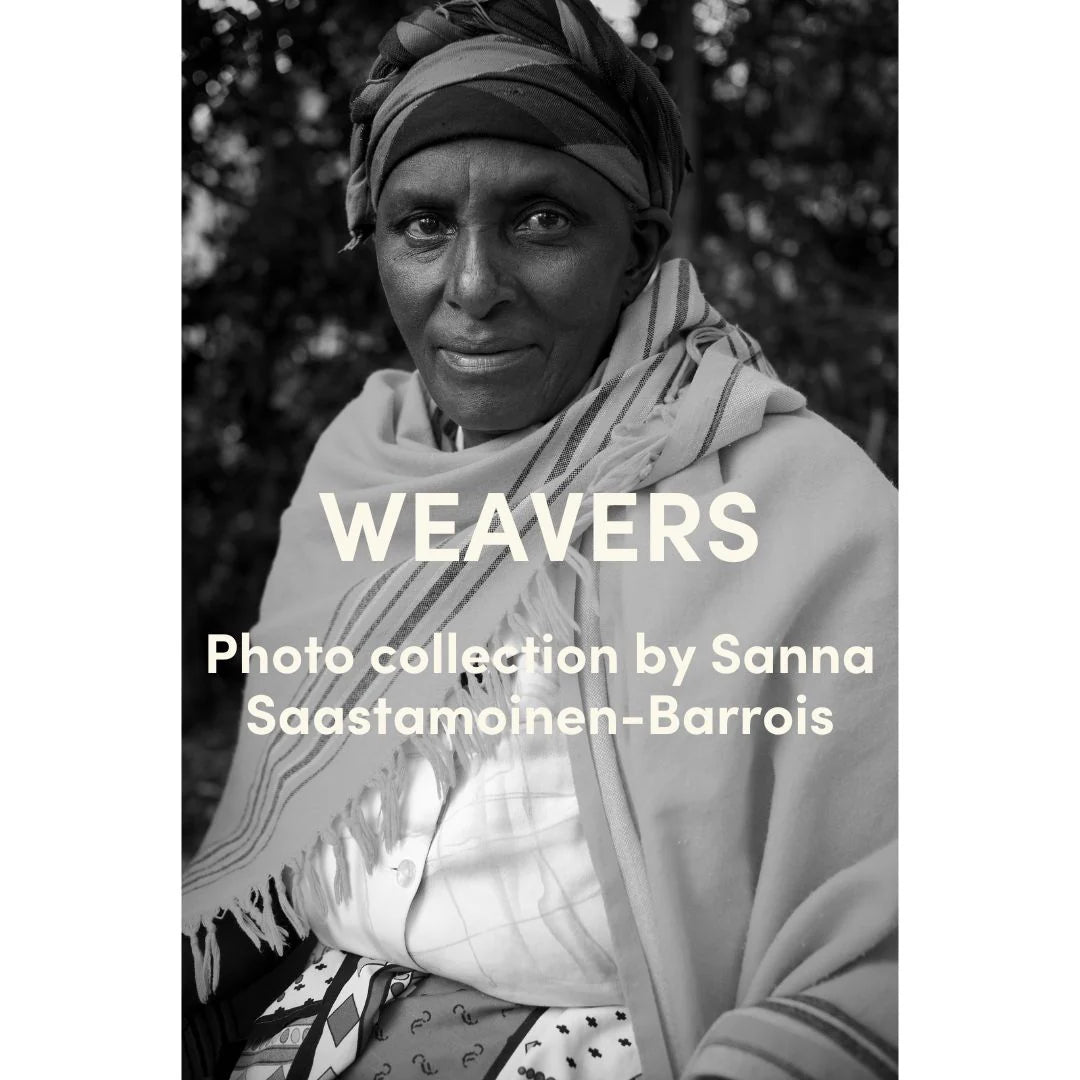
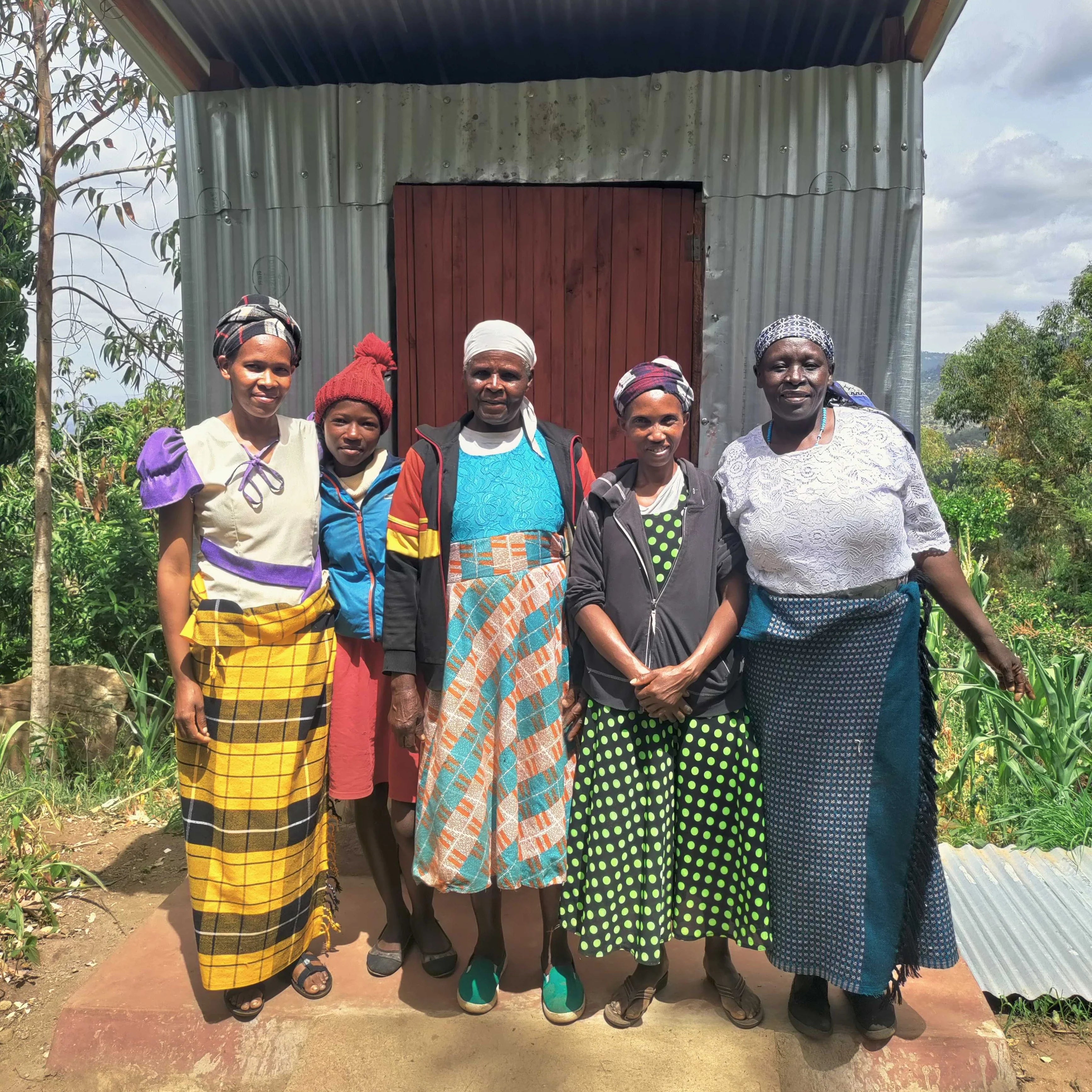
Does the brand introduce the artisans or communities? True partnership gives a face and a voice to the makers. Their stories are an integral part of the product, not just marketing material.
-
Is the communication consistent and in-depth? Responsibility is not just a single sentence at the bottom of a webpage. It is part of everything the brand does—read more about how we tell (our story) and support communities.
Who Made Your Bag? The Story Behind the Product is the Most Important Guarantee
What if your bag wasn't just an object, but a tool to create a connection with another human being? This is the deepest essence of Fair Trade. Beyond all certificates and material data, the most important guarantee of authenticity is ultimately the story—the knowledge that your choice is part of a larger, positive narrative that provides empowerment and opportunity.
Every Bag is Signed
When you buy a handmade bag from a company that follows Fair Trade principles, you are not buying an anonymous mass-produced item. You receive a piece of an artisan's life, skill, and dreams. With us, every (Kiondo tote bag) is unique and finished with the maker's signature. This small mark is a big promise: it tells you that behind your bag is a person whose work is valued and whose story matters. It changes the meaning of the object and makes it personal.
"This is not just my job; this is my art. Every weave is part of a tradition I learned from my mother. It is a joy to know that someone on the other side of the world appreciates it and carries it with them."
Recognizing a Fair Trade bag requires the curiosity to ask where products come from. It is the desire to understand what our choices mean. When you carry a bag whose story you know, you carry much more than just your belongings. You carry hope, dignity, and connection—and you make the world a little more beautiful and just, one bag at a time.

