

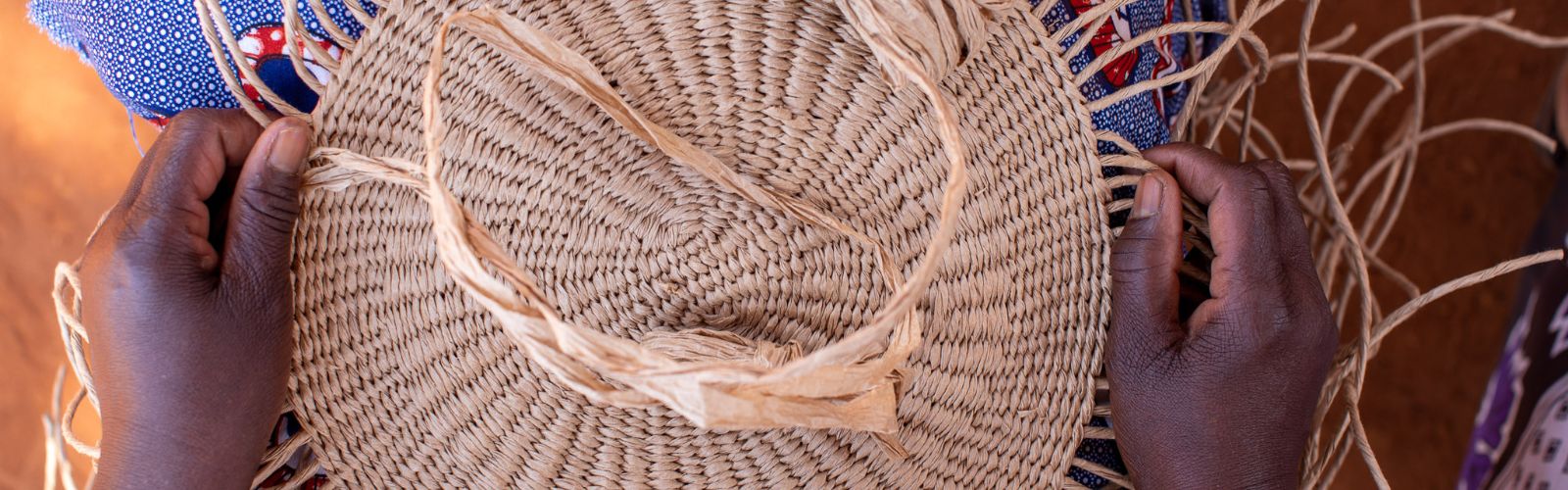
Mifuko’s business model supports women’s livelihoods in rural Africa through long-term trading partnerships with artisans. These partnerships are built around local self-help groups, where women earn an income through their skills, save money, share experiences and keep traditional craft skills alive.
Artisans interviewed in Kenya report using their weaving income to cover their families’ basic needs, pay children’s school fees, improve their homes and develop their farming activities and small businesses. The groups also provide loans to members in need, enabling them to invest in their families’ wellbeing or small businesses.
EXTERNAL IMPACT ASSESSMENT
In 2025, Research PLUS Africa conducted an external qualitative impact assessment commissioned by Mifuko. The assessment included in-depth interviews with 120 randomly selected women artisans. Additional data was collected through focus groups, interviews with community representatives and household visits.
Key changes identified in the assessment included a greater ability to meet families’ basic needs, save money and invest in other livelihoods, alongside increased self-confidence, financial independence and standing within the community. The assessment also identified improvements in weaving skills and new leadership roles.
Handmade
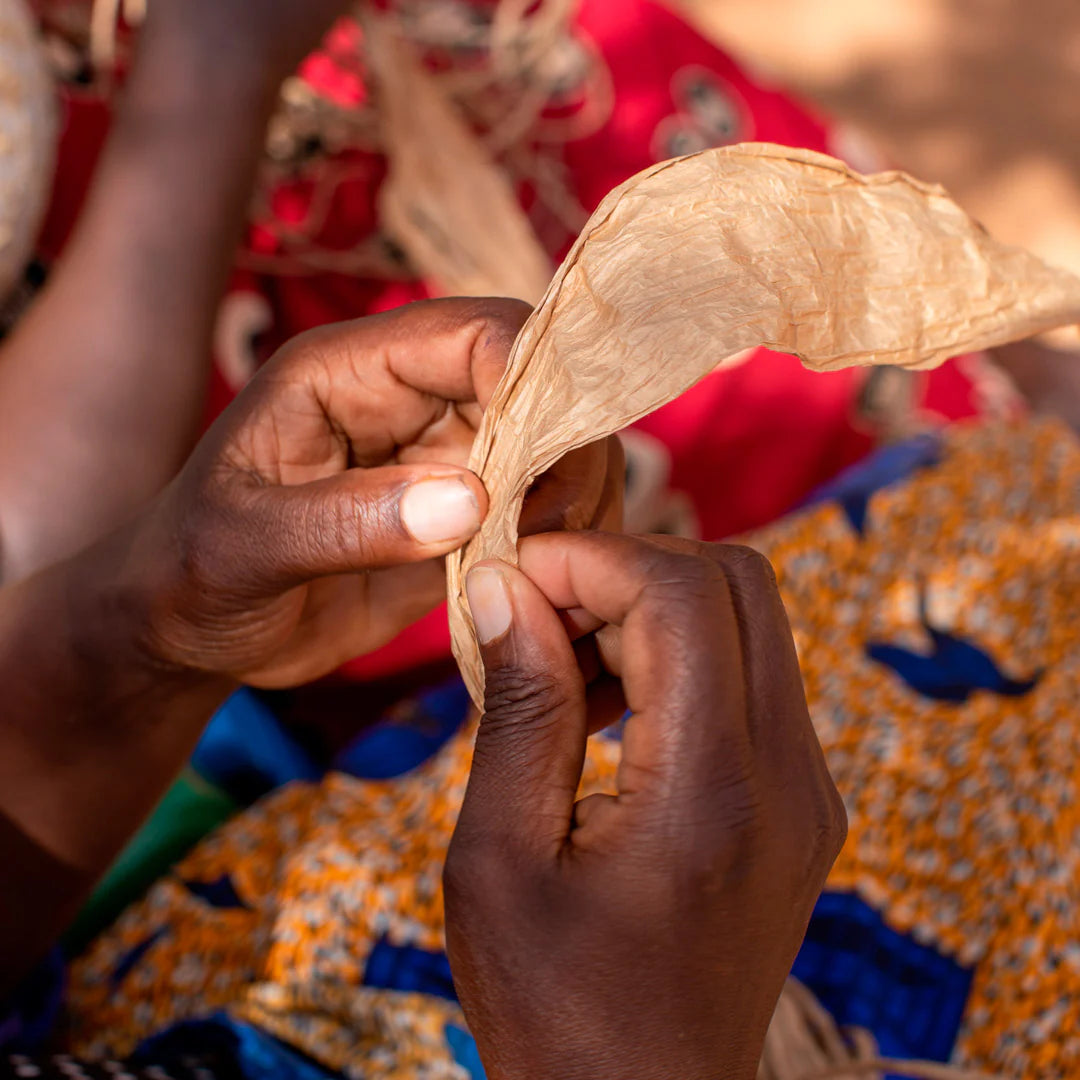
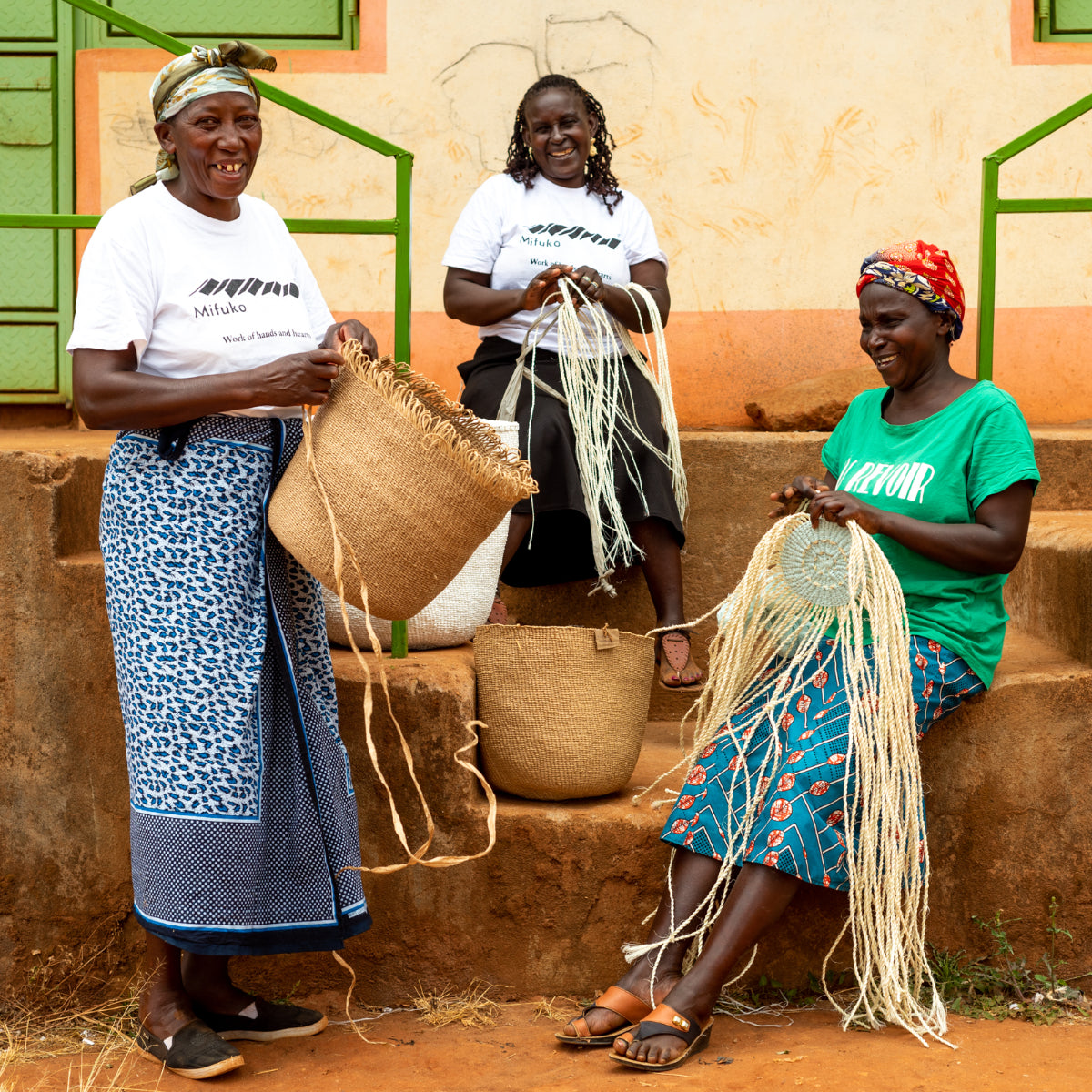
All our products are handmade and carefully designed. We promote appreciation of traditional craftsmanship and its transmission to future generations.
We maintain a permanent collection so that artisans can continue working with familiar materials and designs. This helps them plan for future orders and maintain consistent quality.
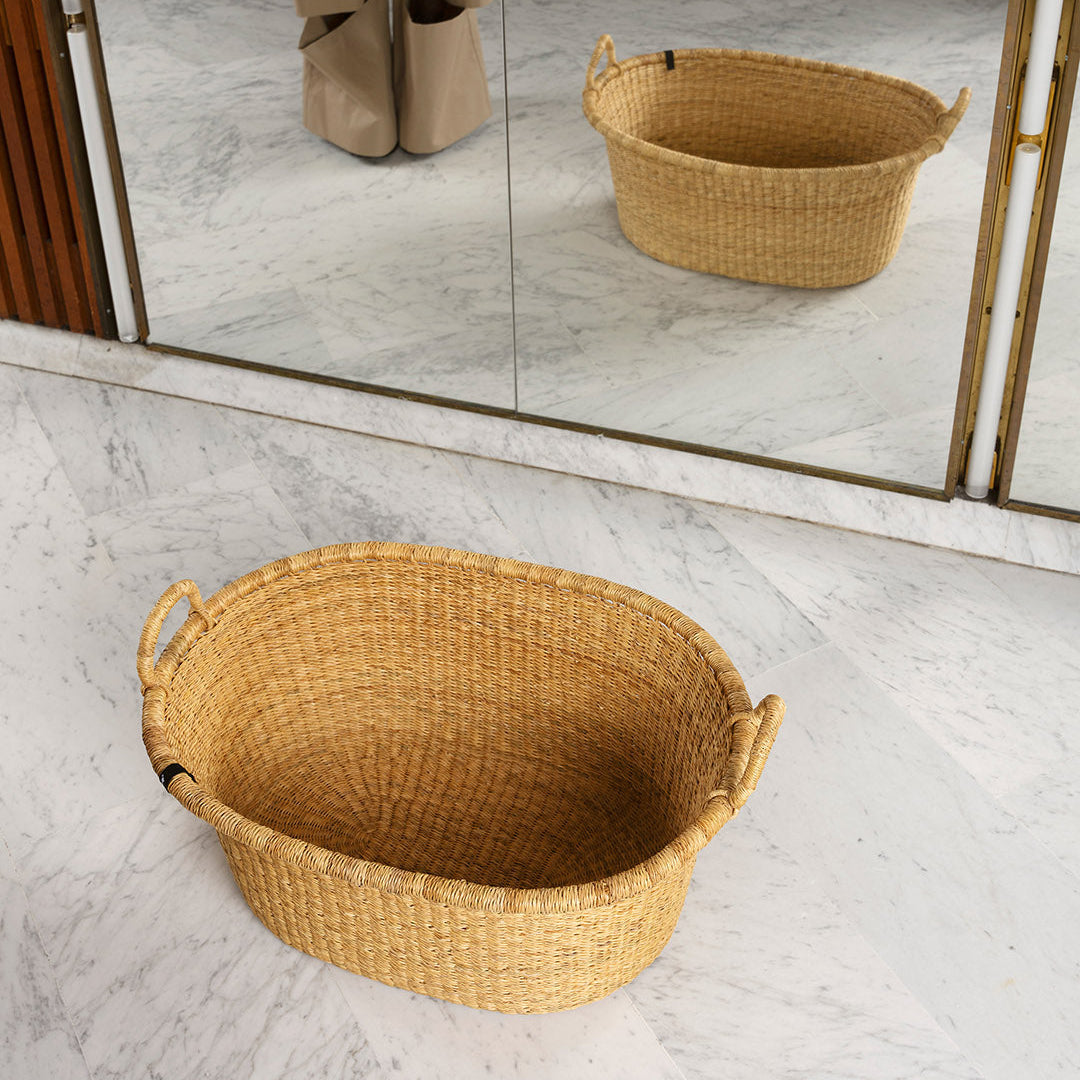
Our products are designed for long-term use. They are carefully handcrafted, with particular attention to quality. Each product is unique, and our baskets can be used in many different ways.
Self-help groups
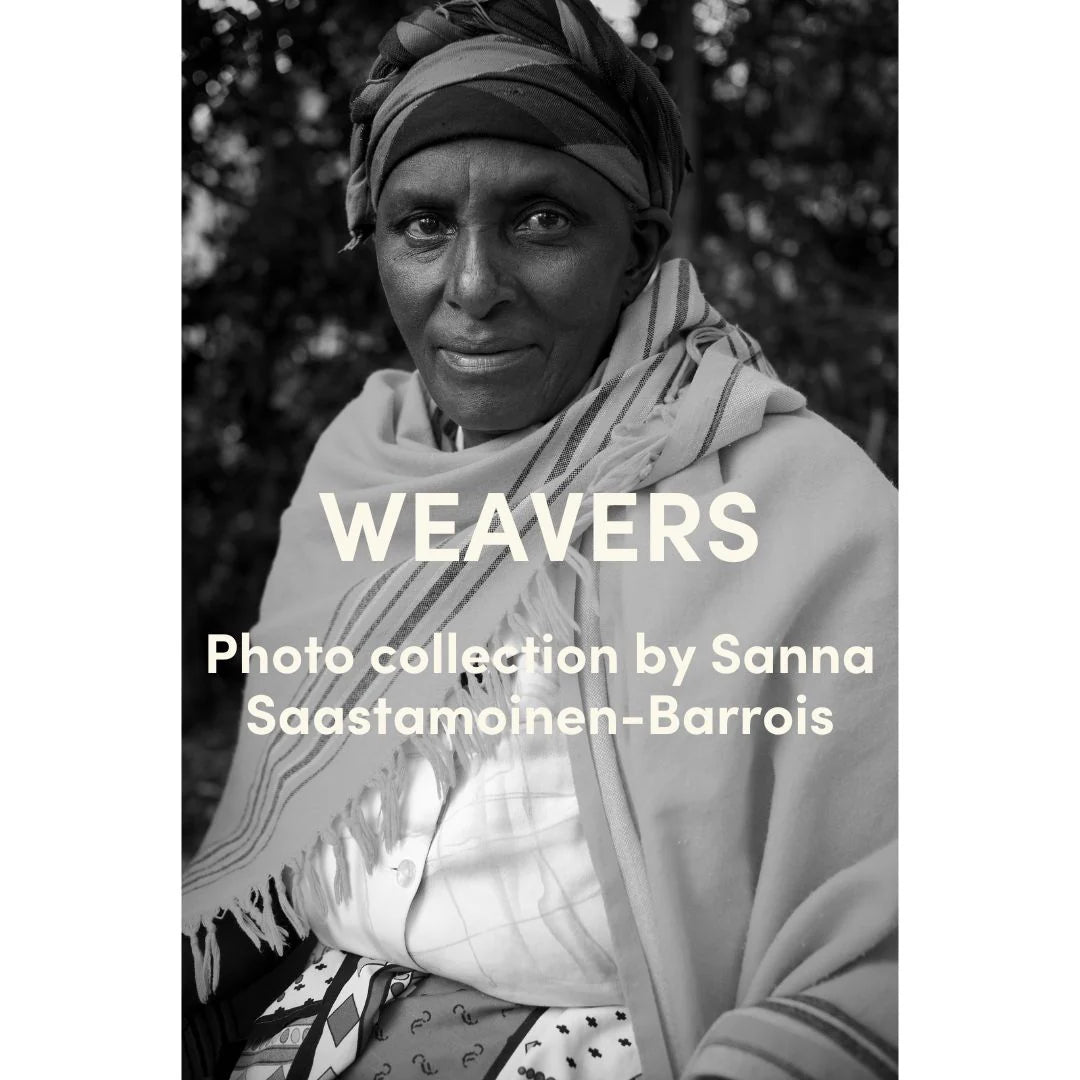
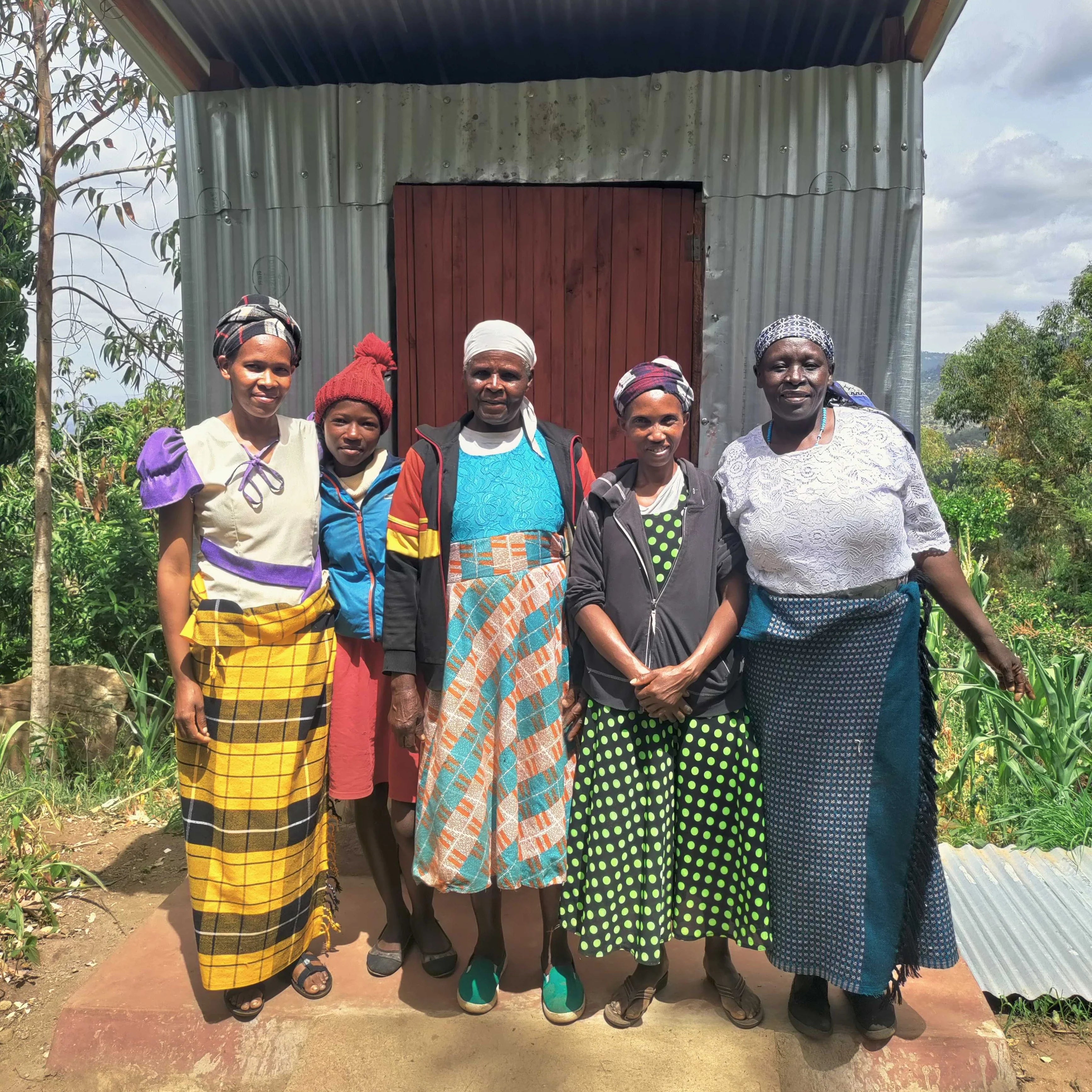
The heart of what we do is with the self-help groups. The artisans in these groups are the most important part of our story. We support and develop the groups’ activities together with the group leaders, the chairladies.
The chairladies founded the Mifuko women development CBO, which acts as an umbrella for all 40 self-help groups with whom we collaborate.
Secure work
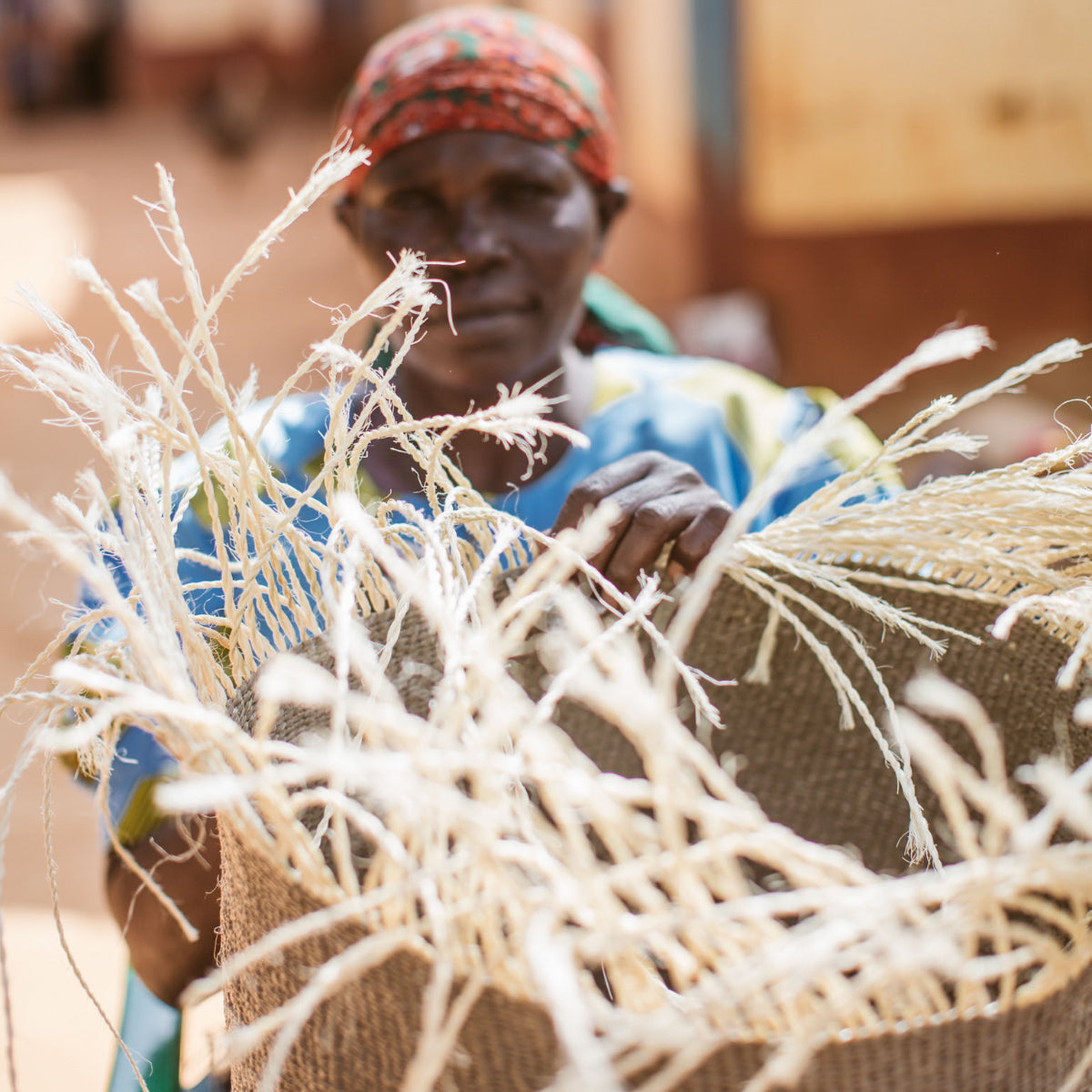
We make it as easy as possible for artisans to collaborate with us. Artisans belong to self-help groups, which provides an economic and social safety net for the members. We deliver the necessary materials and tools to the groups, and baskets can be woven at home, at times that best suit each artisan.
When finished, the orders are brought to a nearby warehouse. We also offer training in basket weaving and quality. Basket orders are ongoing, allowing for future planning.
Fair price
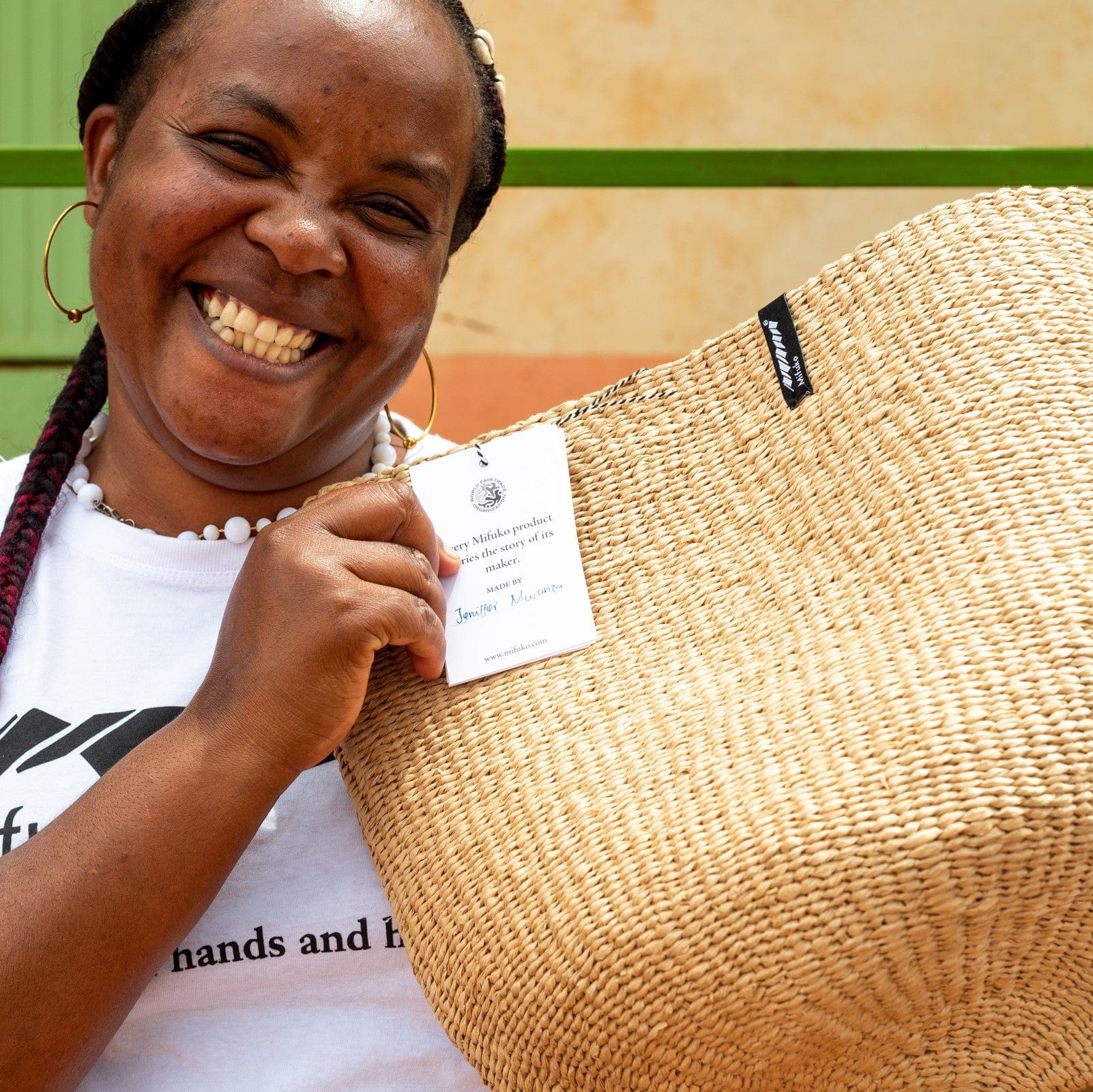
As a WFTO member, Mifuko provides a verifiable Fair Trade income for artisans. The social, economic and environmental needs of the artisans are factored into our business model. A decent standard of living must cover food, water, housing, education, health care, transport, clothing and the ability to save for unexpected events.
We determine the living wage by using the Living Wage Ladder tool provided by WFTO. In practice, payments for Mifuko orders are agreed upon together with the local community.
Training
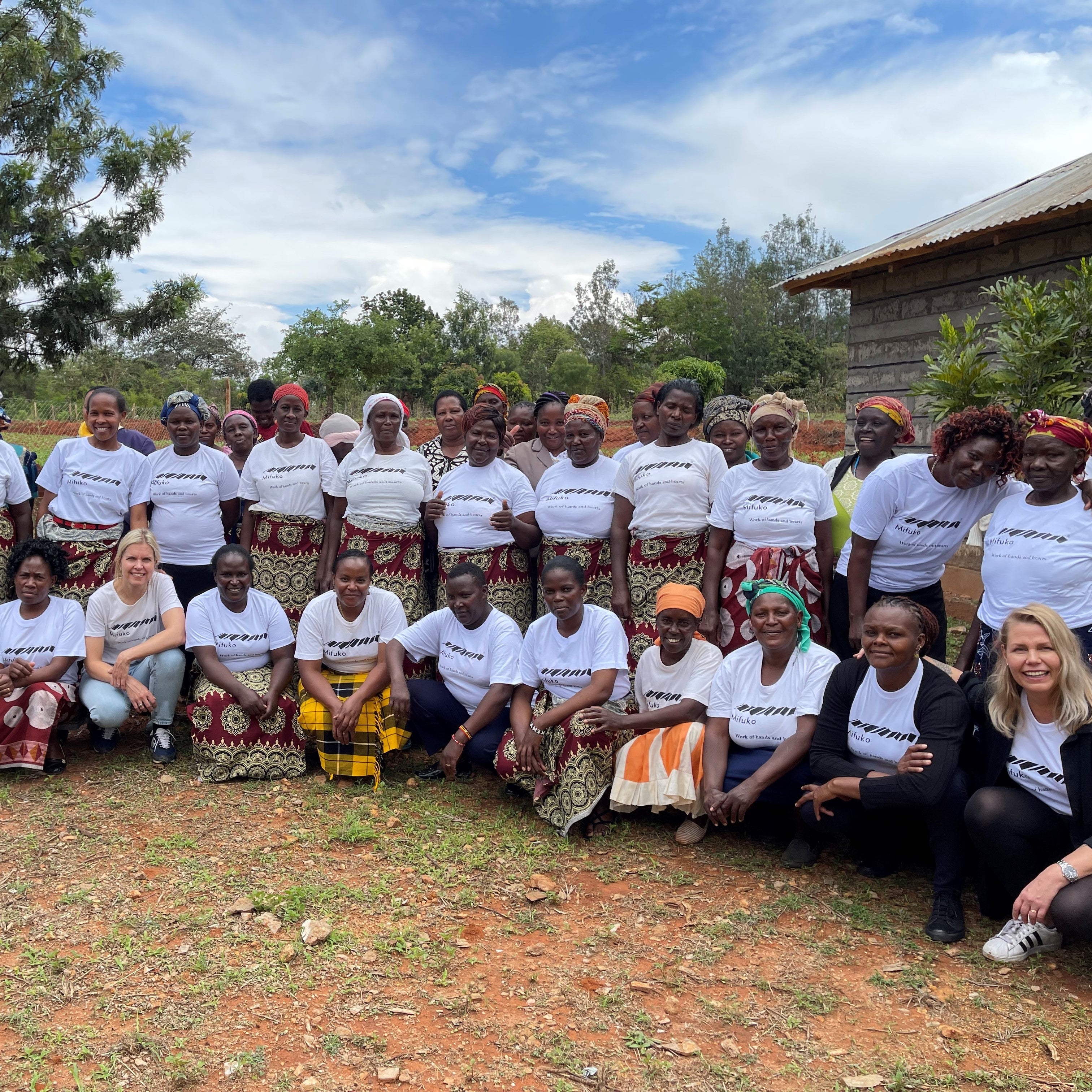
We have developed a three-stage training programme for self-help groups to strengthen their economic and social activities. The training covers how a self-help group operates, regular saving practices and basket weaving.
We also provide ongoing quality training and support the groups in developing their capabilities. Artisans interviewed in Kenya have reported that the training has improved their weaving and design skills. Some also use these skills to make products for local sale or teach others. The training also aims to strengthen the way self-help groups operate and increase members’ opportunities to influence decisions.
Inclusive business model
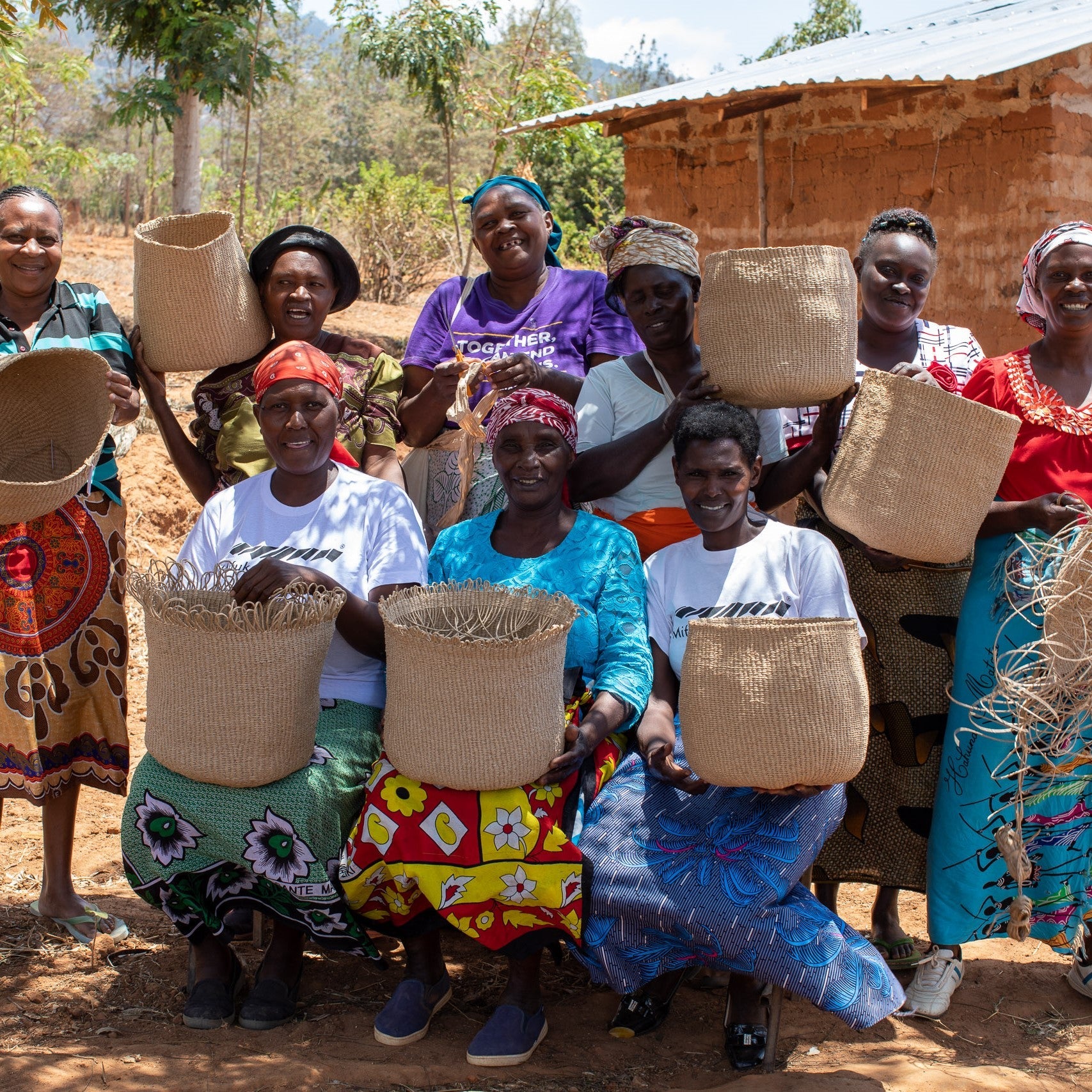
We provide livelihood opportunities for disadvantaged women living in remote rural areas that are hard to reach, where there are few other sources of income.
We work directly with the women’s groups, supporting them to become key actors in their communities. We encourage women’s groups to act as a savings group and to invest collective funds in areas that suit them.
Supply chain
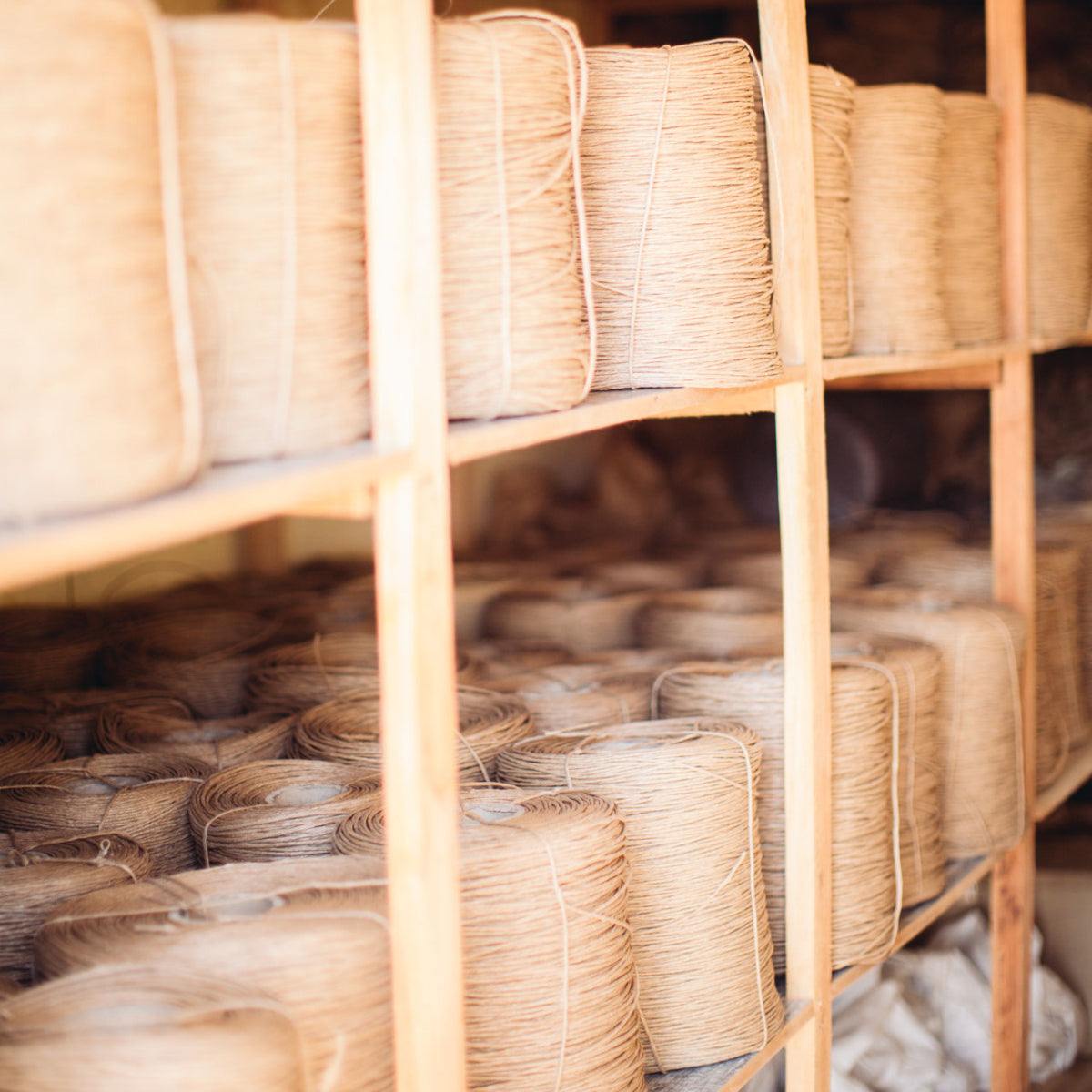
We work directly with the small-scale suppliers and customers. It’s important to us that the supply chain is transparent. We are in touch with each link of the chain, from the maker to the buyer, and communicate stories across the links.
We maintain long-term partnerships and we meet all partners regularly. We have been working with the same partners since the beginning and bring new partners on board through training.
READ MORE ABOUT THE IMPACT MIFUKO HAS
Social Impact
Mifuko’s business model supports women’s livelihoods in rural Africa through long-term trading partnerships with artisans. These partnerships are built around local self-help groups, where women earn an income through their skills, save money, share experiences and keep traditional craft skills alive.
Artisans interviewed in Kenya report using their weaving income to cover their families’ basic needs, pay children’s school fees, improve their homes and develop their farming activities and small businesses. The groups also provide loans to members in need, enabling them to invest in their families’ wellbeing or small businesses.
Read more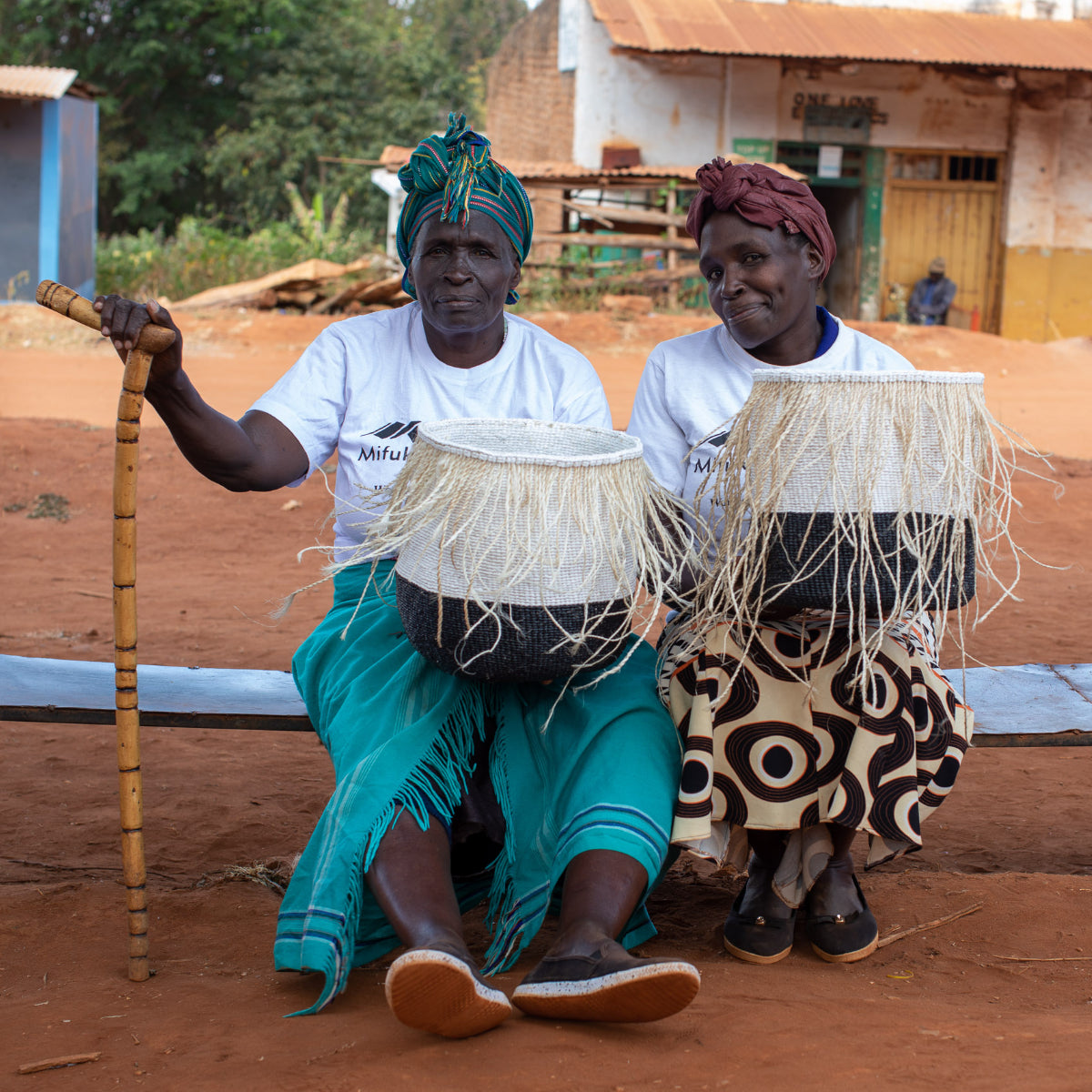
Economic impact
In Kenya, climate change has led to recurring droughts. As a result, farming, traditionally the main source of income, no longer provides a reliable basis for a stable livelihood. The income our artisans earn from weaving Mifuko baskets helps safeguard their families’ livelihoods when crops can no longer provide that security.
Read more
Environmental impact
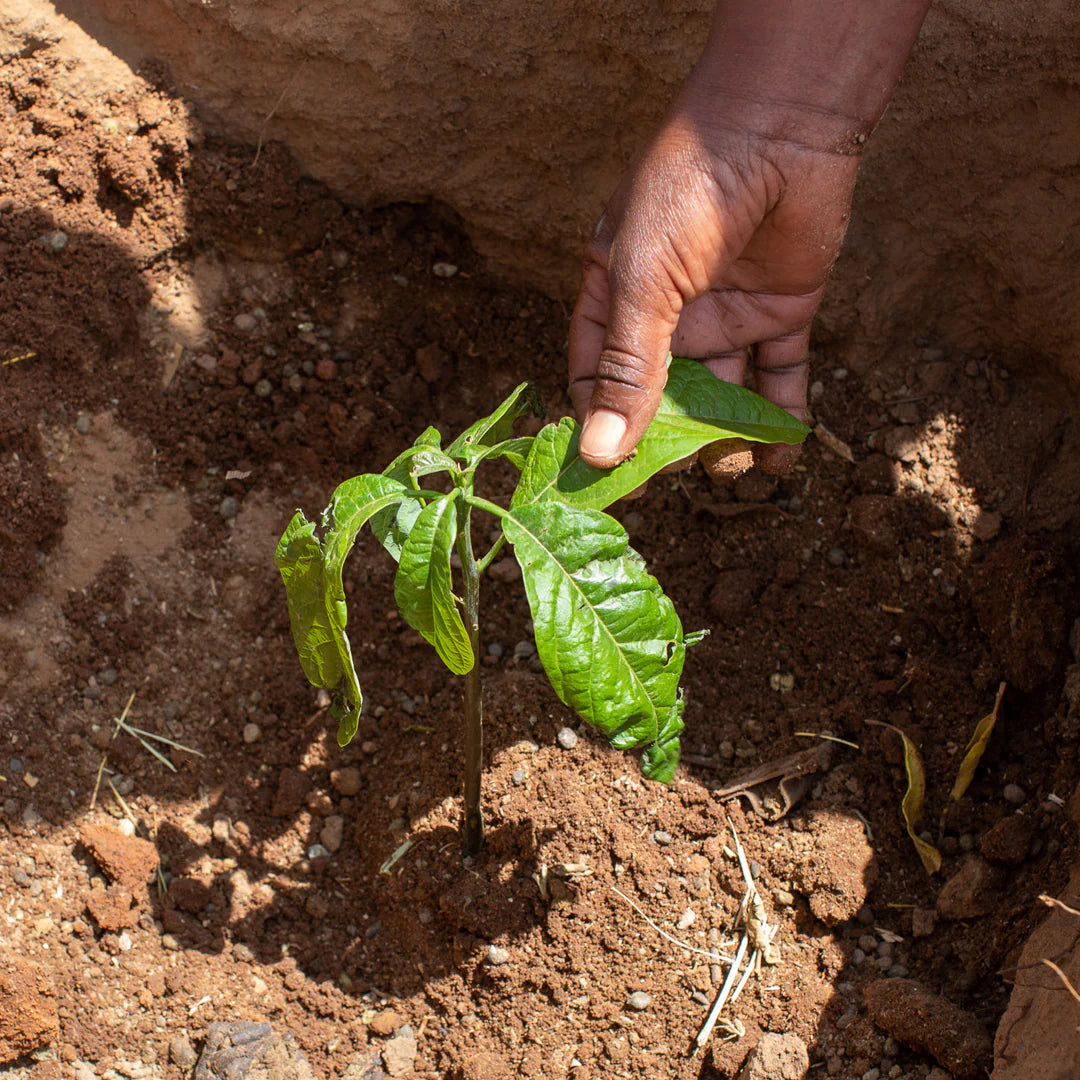
Our environmental work is based on concrete actions both in communities and within our own value chain. Mifuko Trust’s projects include solutions for water- and climate-smart agriculture that aim to support adaptation to climate change. Mifuko also measures greenhouse gas emissions across its own value chain in accordance with the GHG Protocol. Our products are handmade, and we provide information on the environmental characteristics of each material individually.
Read moreMifuko Blog
Latest articles
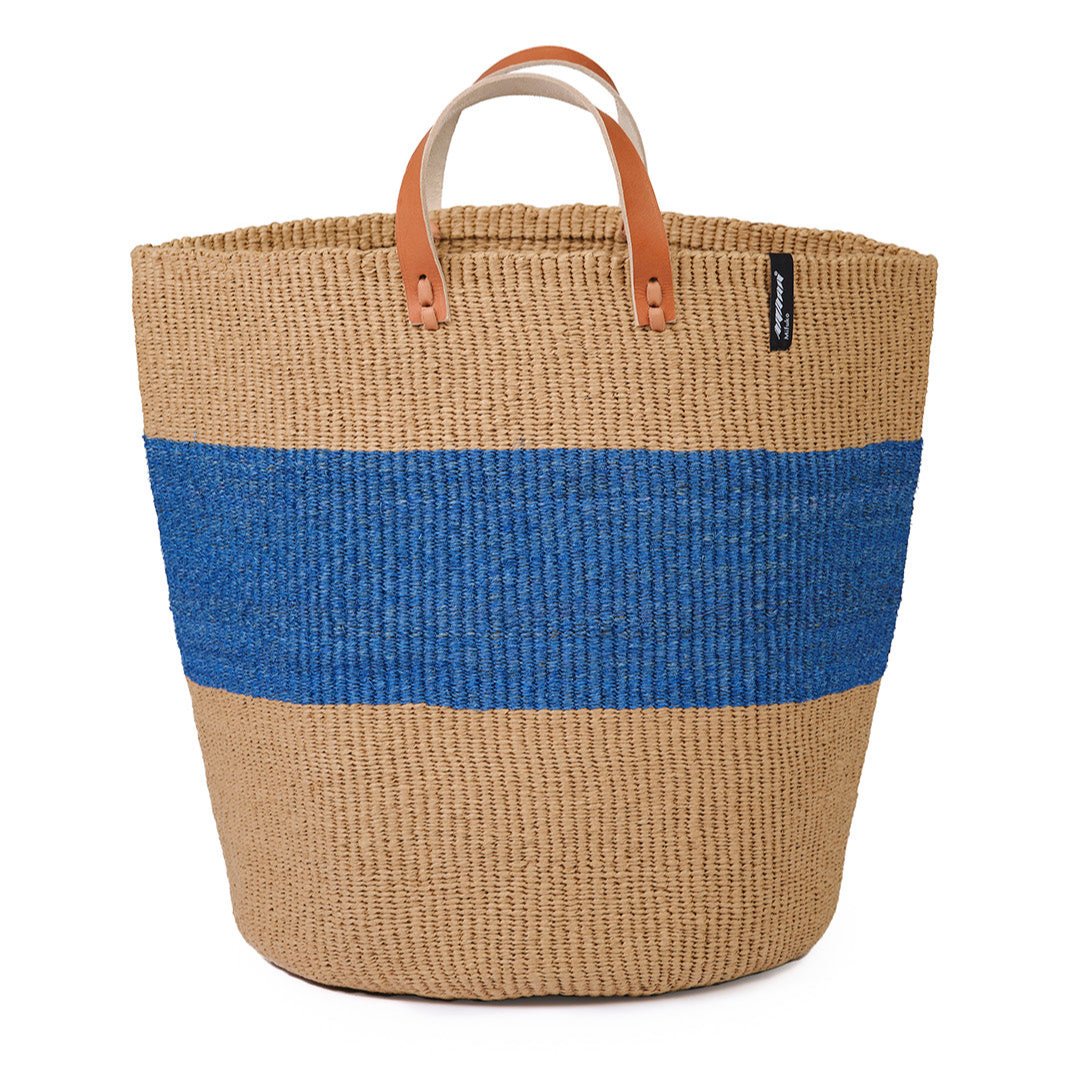
Ethical design basket: How to recognize an authentic and sustainably made home decor product?
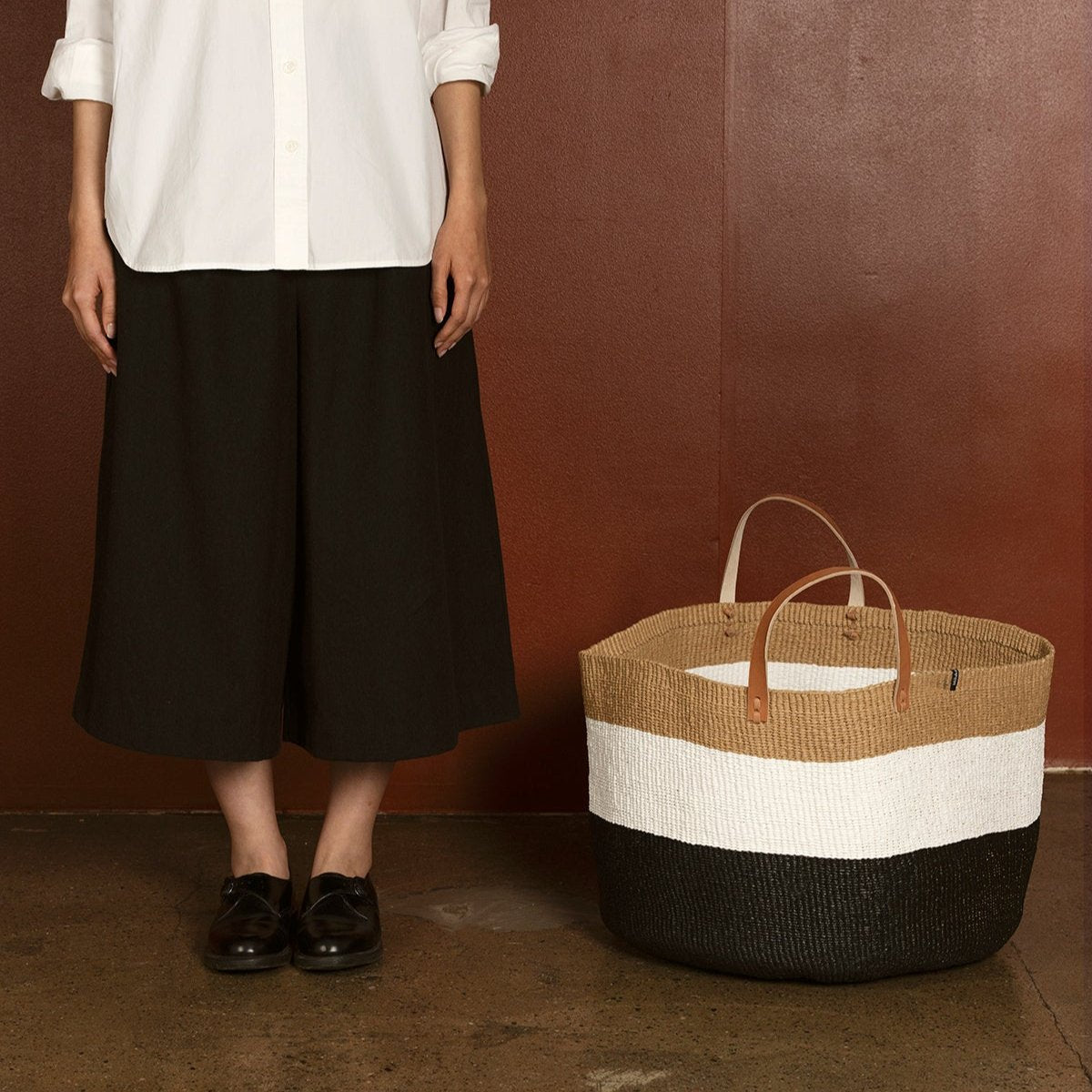
Breathable decorative laundry basket: How to avoid musty smells and mold in dirty laundry?